Tuesday, June 18, 2013
Production History
Original Broadway
Biltmore Theatre
New York, New York
Oct. 23, 1963- June 25, 1967
Mike Nichols- Director
Oliver Smith- Scenic design
Robert Redfor- Paul
Recent Broadway
Cort Theatre
New York, New York
Feb. 16, 2006- May 21, 2006
Scott Elliott- Director
Derek McLan- Set
Patrick Wilson- Paul
Off-Broadway
Bucks County Playhouse
New Hope, Pennsylvania
August 7, 2012- Sep. 2, 2012
Sheryl Kaller- Director
James Noone- Set
Lee Aaron Rosen- Paul
Recent Regional
Unity Theatre
Brenham, Texas
April, 14, 2005- May 01, 2005
Teresa Beckers- Director
Jodi Bobrvosky- Set
Charles Charpiot- Paul
Houston Production
Texas Repertory Theatre
Houston, Texas
March 26, 2010- April 11, 2010
Steve Fenley- Director
Liz Freese- Set
Stephen Myers- Paul
Dallas Production
Contemporary Theatre of Dallas
Dallas, Texas
Cynthia Hestand- Director
Jen Gilson-Gillian- Set/Props
Will Christoerson- Paul
Oct. 29, 2010- Nov. 21, 2010
All-Black Cast Television Series
Sitcom
Premiered on Sep. 24, 1970
Ran for 12 episodes
Bruce Bilson, Jerry Paris, Charles R. Rondeau- Directors
Scoey Mitchell- Paul

Monday, June 17, 2013
Production Stills
 |
| The original Broadway cast of Barefoot in the Park in 1963. |
 |
| Play House Theatre in Tulsa Oklahoma did Barefoot in the Park in 2013. |
 |
| Ivoryton Playhouse in Connecticut did Barefoot in the Park in 2011. |
 |
| MUT did Barefoot in the Park in 1967which was modern at the time. |
 |
| ReAct did Barefoot in the Park and the cast was mostly Asian. |
 |
| Contemporary Theatre in Dallas did Barefoot in the Park in 2010 |
 |
| The 2006 Broadway revival of Barefoot in the Park at the Cort Theatre. |
 |
| The Otterbein Summer Theatre produced Barefoot in the Park in 2012. |
Friday, June 14, 2013
Hard Copy Resources
Hard Copy Resources
Encyclopedia of the Sixties: A Decade of Culture and Counter Culture, James S. Bagess and Abbe Allen Debolt, 2012
REF E 169.12 .E515 2012 v.1
This book is an encyclopedia of everything 1960s culture. This would be valuable because it shows fashion from the day.
New York 365 Days, Gay Talese, 2006
F 128.37 .N5155 2006
This book is a giant picture book of New York ranging from the years 1920-2008. This would be valuable because there are pictures of what things look like now in New York and how they were in the 1960s.
Lost New York, Nathan Silver, 1967
F 128.37 .S55
This is a book full of architecture in the 1960s. This book would be valuable because there are pictures of old Brownstones and what other buildings looked like around New York and other big cities.
Impossible to Hold, Avital H. Bloch and Lauri Umansky, 2005
E 841 .I47 2005
This is a book that talks about the influential women in the 1960s and how they impacted society and other women of the time. This would be valuable because Corie Bratter is a strong woman who has her own views of life and I feel her character is greatly impacted by these women.
New Yorker, n/a, 1962
AP2 .N6763
This is a periodical of collections from the New Yorker in November though December in 1962. This is valuable because the play is set in the early 1960s and in winter. This information can be used to decorate their house with the items advertised and it also talks about what exactly was going on around the time the play opened on Broadway as well.
Wednesday, June 12, 2013
Sounds and Images
Sounds and Images
Corie tells Paul that she is going to do a "Cambodian Fertility Dance". This is a video depicting it at a festival.
Paul and Corie live in an old brownstone building. This is an image of the outside of the buildings.

The newlyweds go the The Plaza for their honey moon. This is an image of the Plaza Hotel today.


Corie whistles the Armenian National Anthem and this is what it sounds like.
Corie orders a Princess phone in beige.

After returning from the Albanian restaurant, Corie and Mr. Velasco burst into the apartment singing "Shama Shama". This is a video from the movie where the song is being sung in the restaurant.
Paul claims that Mr. Velasco orders him around like he "was one of the Santini Brothers" while arranging their apartment. This is who the Santini Brothers are.
Because Corie is fun and flirty, her fashion sense would be that of a "mod girl" and less like a Jackie Kennedy in the 1960's. This is "mod" fashion.

This link goes to different maps of New York City and the surrounding areas in the 1960's.
Paul and Corie are a young couple and would be pretty in tune with the culture of the day. The artist Andy Warhol was a big success in the 1960's with his bright colors. This is a self portrait of his.
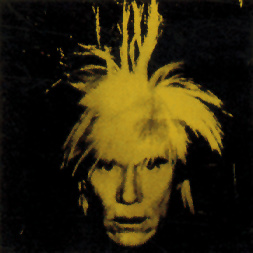
Corie is a free spirit and would listen to all types of music. This video is the top 60 songs of the 1960's.
Tuesday, June 11, 2013
Where and When
When and Where
Barefoot in the Park is set in New York City, New York in 1962 America.
During this time in New York:
Dramaturgical Challenge
What is a morning room?
- Room used for luncheons. In the latter 19th century, the room became a space in which the ladies, Mrs. Harris in particular, would spend the duration of the morning doing their “work.” The work that was enacted included handcrafts such as embroidery and sewing, letter and journal writing, as well as giving daily direction to the servants. Because the “work” of the day was to take place in the morning, it was socially understood that visits to or from friends ought to be short: hence the array of uncomfortable small chairs which can be found in the room. The morning room in Eldon House faces west, which in some Victorian homes was deliberate; there was an assumption in that period that morning sunlight was harmful to the skin, and so the “morning” room’s location tended not to face east. Source
What furnishings would be considered luxurious and artistic?
- Heavy mahogany and rosewood furniture symbolized prosperity, while elaborate tapestry cushions made their debut on dining room chairs and armchairs, providing comfort and luxury. Marble fireplaces were the focal point, and guests dined beneath crystal chandeliers in dining rooms, which were often decorated with patterned wallpaper featuring greens, browns or pastel colors. Birds in gilded cages and dado rails were fashionable accessories. source
Afternoon Tea and High Tea are two different types of events. Afternoon Tea, also known as "low tea", is usually taken in the late afternoon. It was called "low tea" because it was usually taken in a sitting room or drawing room where low tables (like a coffee table) were placed near sofas or chairs.There are three fundamental types of Afternoon Tea:
Cream Tea (tea, scones, jam and cream)
Light Tea (tea, scones, and sweets)
Full Tea (tea, savories, scones, sweets and dessert)
High Tea, also referred to as "meat tea", is typically of a heavier consistency, such as adding soup and salad to the menu.
Today, tea rooms serve a variety of tea courses purposely in this order: Scones (with jam and Devonshire or clotted cream), Savories (tiny sandwiches or/ and appetizers), soup, salad and pastries (cakes, cookies, desserts)
The traditional time for afternoon tea is four o'clock. Today, most hotels and tearooms in North America serve from three to five o'clock with the hours often stretched slightly in either direction. Along with a choice of teas, there are three distinct courses:
- savones (tiny sandwiches) first to blunt the appetite,
- then scones, and finally,
- pastries.
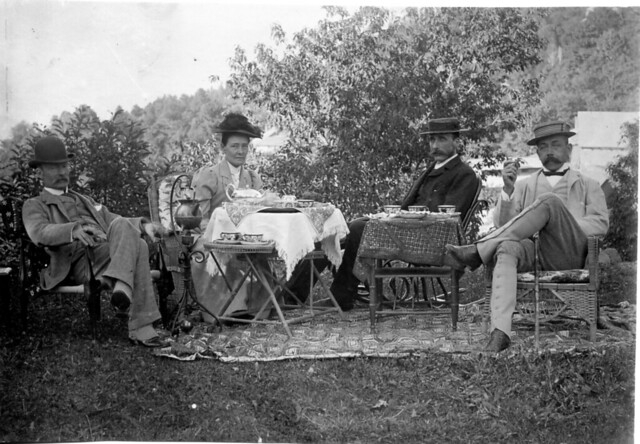
- The tea tray and china tea set are placed at one end of the table.On the right, set out the necessary number of cups and saucers and teaspoons to accommodate your guests.Plates, flatware, and tea napkins are placed on the left.Platters of refreshments can include tea sandwiches in fancy shapes, various kinds of nut breads, cakes, pastries, and cookies.
- Henry Litoiff
Monday, June 10, 2013
Historical Questions
The following are questions that should be researched from a historical point of view.
Corie and Paul live in the upper level of a Brownstone apartment building. The cost of living is a very important fact that should be known. Corie wants to lie to her mother to make her think that the rent isn's that expensive and she needs to pick a believable amount. So the questions would be, what was the cost of renting a one bedroom apartment in New York City in 1964, when it premiered on Broadway, and what would that be today? Also what is the actual cost of living in New York City today?
- The average rent in 1964 was $115 a month.
- Compared: $115 would be $840.03 today.
- Now a days, in a studio apartment, rent would be around $2,300- $2,800 a month.
Corie tells Paul that she was going to perform "an authentic Cambodian fertility dance." What is the traditions in Cambodia in regards to fertility dancing? What does this fertility dance look like?
Corie's mother has to sleep on a board and this point it brought up time after time in the script. What was the medicinal benefits of sleeping on a board? Corie's mother also takes little pink pills that, by the end of the play, Mr. Velasco has to start taking as well. What were these pink pills and what was the medicinal purpose?
Paul is a lawyer in New York and is the only one bringing money into the relationship. How much did lawyers make in 1964 compared to what they make today?
A lot of different foods are brought to the Bratter household by Mr. Velasco. The questions that would need to be asked are, what exactly is Knichi and how strong is the Greek liquor "Uzu"?
Paul and Corie live in an apartment in the East Forties off Third Avenue and Mr. Velasco suggests they go to Statin Island for dinner. Corie suggests to her mom that this is an adventure. How far is Third Avenue from Statin Island. Her mother lived in New Jersey and Mr. Velasco volunteers to take her all the way back. How far is New Jersey from the newlyweds apartment?
Subscribe to:
Posts (Atom)